

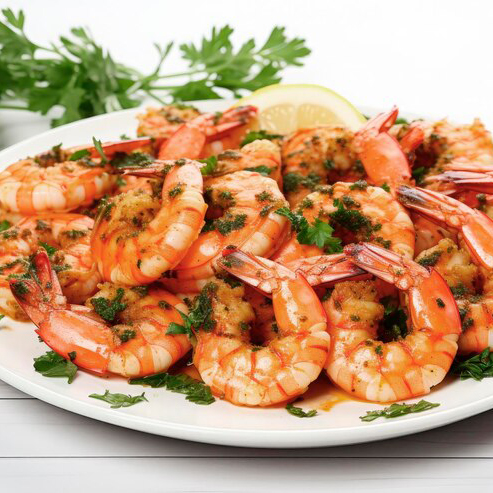
Shrimp is a nutrient-dense food, offering a wide range of vitamins, minerals, and other essential nutrients. Here’s a general breakdown of the nutritional profile of a 3-ounce (85-gram) serving of cooked, peeled shrimp:

Nutritional Profile (per 3 oz or 85g serving):
- Calories: 80–90 kcal
- Protein: 18–20 grams
- Fat: 1–2 grams
- Saturated Fat: 0.5 grams
- Monounsaturated Fat: 0.4 grams
- Polyunsaturated Fat: 0.4 grams
- Cholesterol: 165–190 milligrams
- Carbohydrates: 0–1 gram
- Fiber: 0 grams
- Sugars: 0 grams
- Sodium: 400–600 milligrams (varies based on cooking method and added salt)
Vitamins & Minerals:
- Vitamin B12: 1.5 micrograms (25% of the daily recommended intake)
- Vitamin D: 40 IU (10% of the daily recommended intake)
- Iodine: 35 micrograms (23% of the daily recommended intake)
- Selenium: 34 micrograms (49% of the daily recommended intake)
- Phosphorus: 170 milligrams (24% of the daily recommended intake)
- Zinc: 1 milligram (9% of the daily recommended intake)

Key Nutrients:
- Omega-3 Fatty Acids: Approximately 200–300 milligrams (primarily EPA and DHA)
- Magnesium: 25 milligrams (6% of the daily recommended intake)
- Calcium: 20 milligrams
- Iron: 0.5 milligrams (2% of the daily recommended intake)
Health Benefits:
- High Protein: Shrimp is an excellent source of lean protein, which is vital for muscle building, tissue repair, and overall body function.
- Low in Carbs: It contains very few carbohydrates, making it suitable for low-carb diets.
- Rich in Micronutrients: It is a good source of vitamins and minerals like B12, iodine, and selenium, all of which are important for brain health, metabolism, and immune function.
- Omega-3s: Shrimp provides beneficial omega-3 fatty acids, which promote heart health, reduce inflammation, and support brain function.
Overall, shrimp is a low-calorie, high-protein, and nutrient-dense food that provides several essential vitamins and minerals, while being low in fat and carbohydrates. However, those with shellfish allergies or concerns about mercury levels should consider these factors when including shrimp in their diet.